Mum, why are you shouting? This question from your 5-year-old might have taken you by surprise last night. Yet you were speaking in a normal voice. But he’d just spent two hours with his headphones cranked up on his tablet.
Today’s noisy world exposes children to noise levels far in excess of the recommended thresholds. Loud electronic toys, bustling canteens, noisy cultural outings… From a very young age, it is essential to protect your child’s hearing. This is because excessive exposure to noise can cause irreversible damage. It’s not just a matter of turning the volume down: it’s about protecting hearing from early childhood, avoiding prolonged exposure to noise and establishing good habits to look after young children’s hearing health. In this article, you’ll find out why this vigilance is crucial, and how to adopt the right habits in everyday life.
The risks to children’s hearing associated with exposure to noise
Danger thresholds lower than we think
A child who is regularly exposed to a noise level exceeding 80 dB is at risk of gradually damaging their hearing, starting from:
- 90 dB: safe listening time of just 4 hours per week
- 100 dB: dangerous level reached within 20 minutes
- 110 dB: damage may occur after just 2 minutes’ exposure
The cumulative effect: the invisible trap
The real danger? Accumulation.
Your child isn’t exposed to just one loud noise, but around ten throughout the day:
- 7.30 am: Hairdryer in the bathroom (85 dB)
- 8.15 am: Car journey, music + traffic (82 dB)
- 12 noon: School canteen (88 dB)
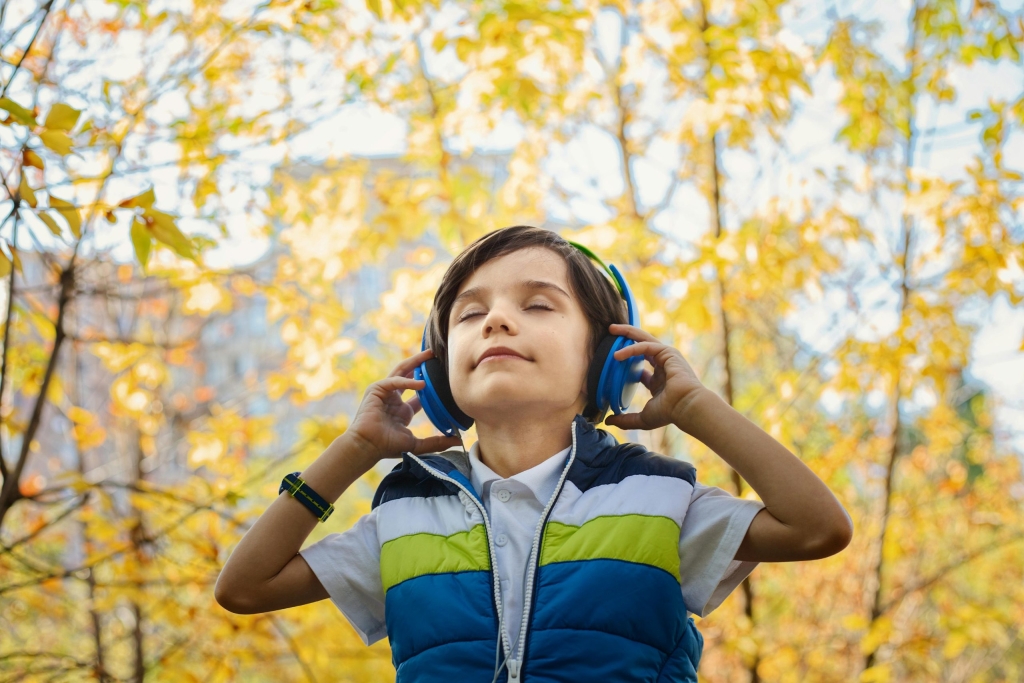
- 4.00 pm: Playing a video game with headphones (95 dB)
- 7.00 pm: Vacuum cleaner whilst cleaning (85 dB)
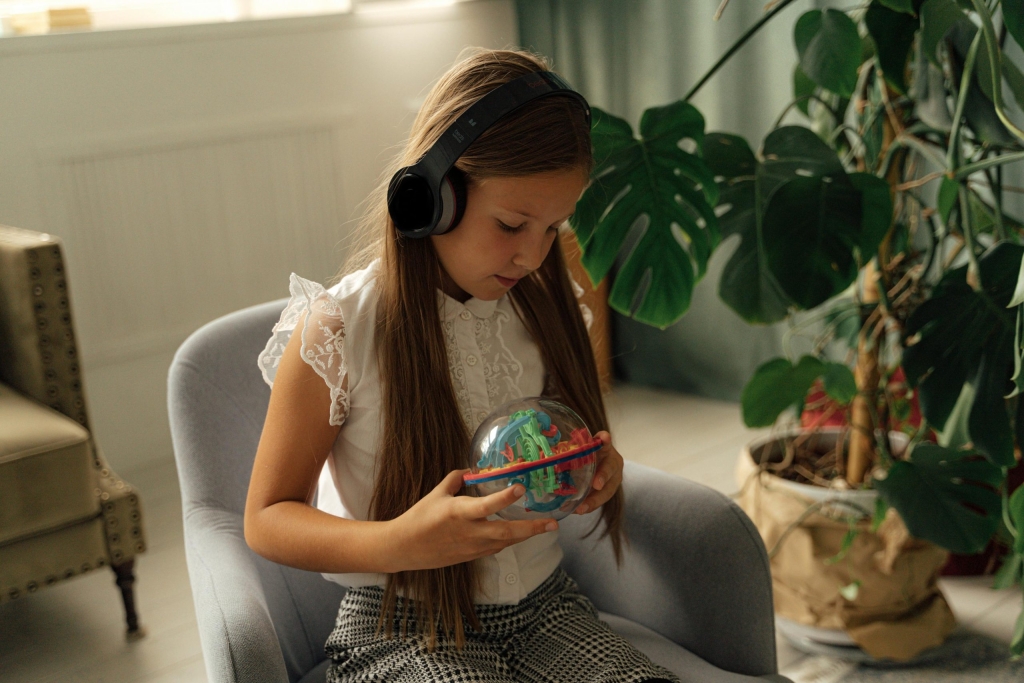
The risks associated with noise exposure in children do not stem solely from noisy events such as festivals or fireworks.
They build up over time through everyday activities: noisy toys, transport, television, headphones, and sporting and cultural activities. The cumulative effect of these exposures amounts to a significant noise load that puts a real strain on your child’s hearing.
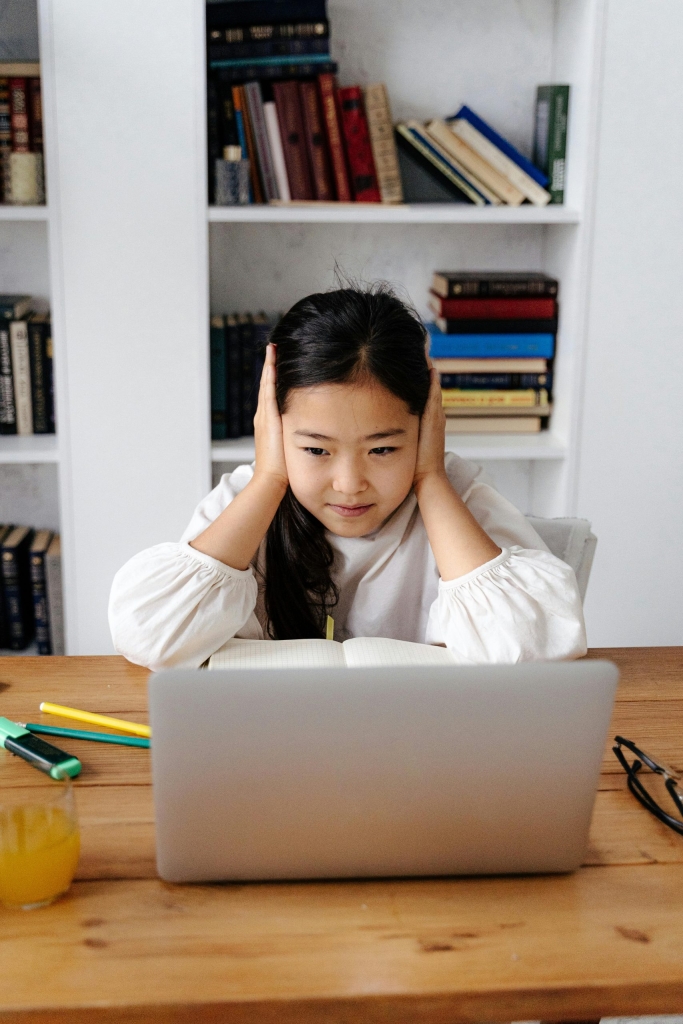
Warning signs you shouldn’t ignore
Does your child display these behaviours?
- He often makes you repeat yourself (“Eh? What?”)
- He turns the TV up louder than usual
- He complains of a ‘ringing’ in his ears in the evening
- He seems less attentive in class
- He speaks more loudly without realising it
This daily exposure to noise builds up, creating chronic auditory stress that is often invisible.
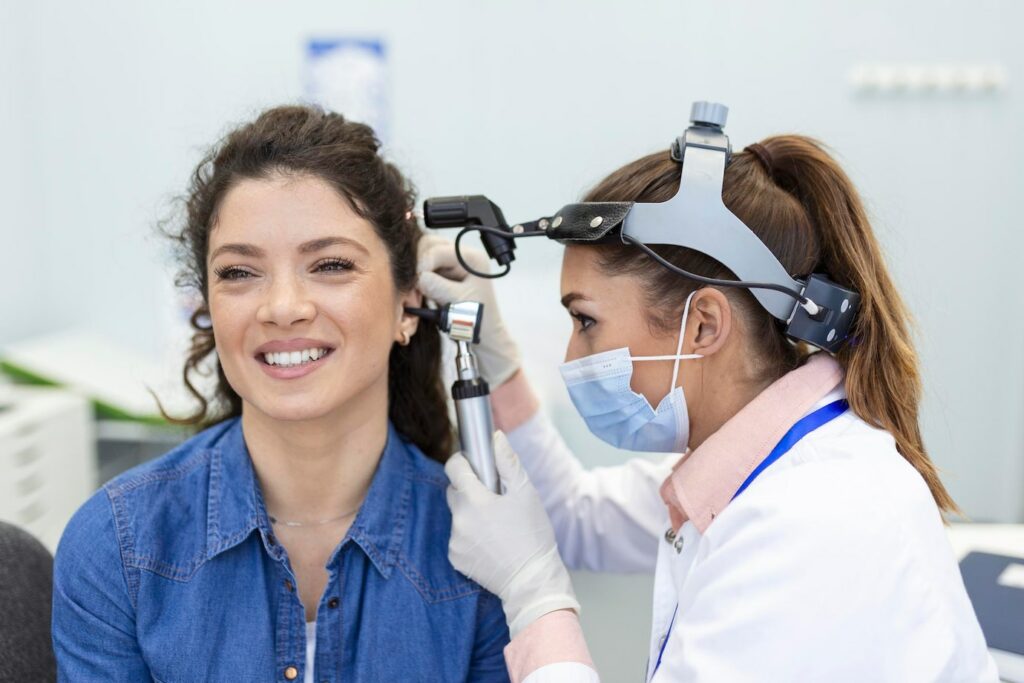
Even just one of these signs is reason enough to have a free hearing test carried out by a professional.
How to choose the best children’s noise-cancelling headphones to protect your child’s hearing
Choosing the right equipment is essential for effective protection. The best noise-reducing headphones for children at a festival must provide sufficient noise attenuation – ideally an SNR* (Signal-to-Noise Ratio) of at least 25 dB – whilst remaining comfortable and adjustable to fit the child’s head.
*The SNR (Signal-to-Noise Ratio) indicates the level of protection in decibels. The higher it is, the better the attenuation.
Hearing protection for babies: start even before birth
The first steps you can take to protect your child’s hearing
Caution must begin well before birth. From the third trimester of pregnancy onwards, the foetus is able to perceive sounds from the outside world. Its auditory system, which is still developing, remains particularly vulnerable to auditory overstimulation.
During pregnancy:
It is advisable to avoid environments where noise levels exceed 85 dB, such as concerts or building sites, and to opt for a quiet environment. Rather than placing headphones on the baby’s tummy, it is better to speak softly to the baby and to limit continuous auditory stimulation.
From birth:
After birth, the same rules apply: keep children away from excessively loud noise sources and limit their exposure to such noise. From the age of six months, using CE-certified children’s ear defenders or a special headband becomes an effective way to protect their ears, particularly at noisy events.
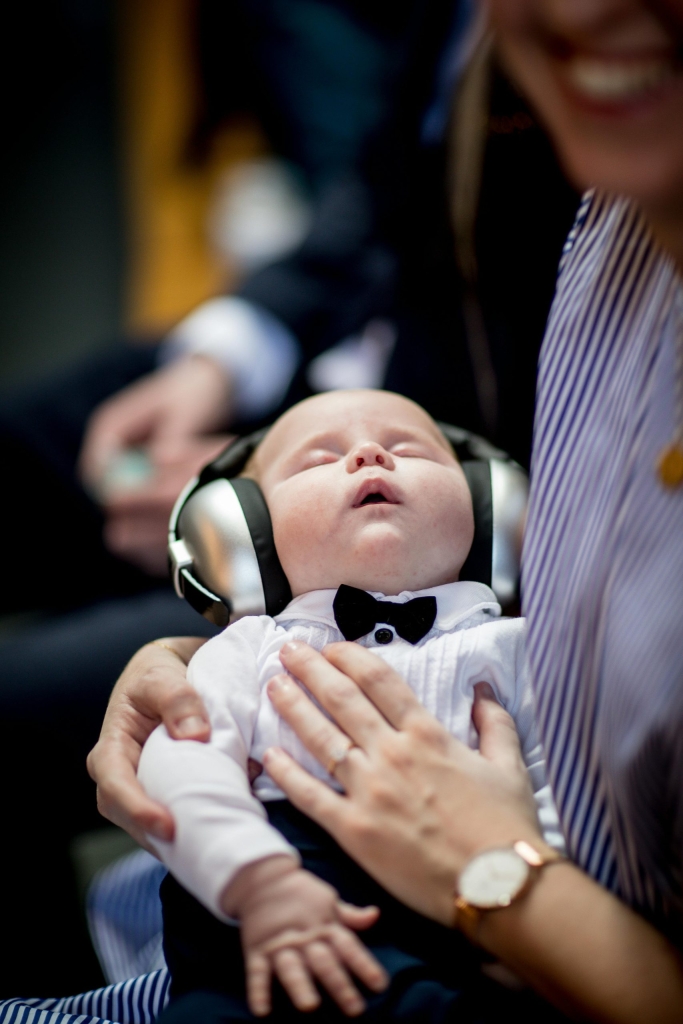
Protecting your child’s hearing: choosing the right noise-cancelling headphones for children
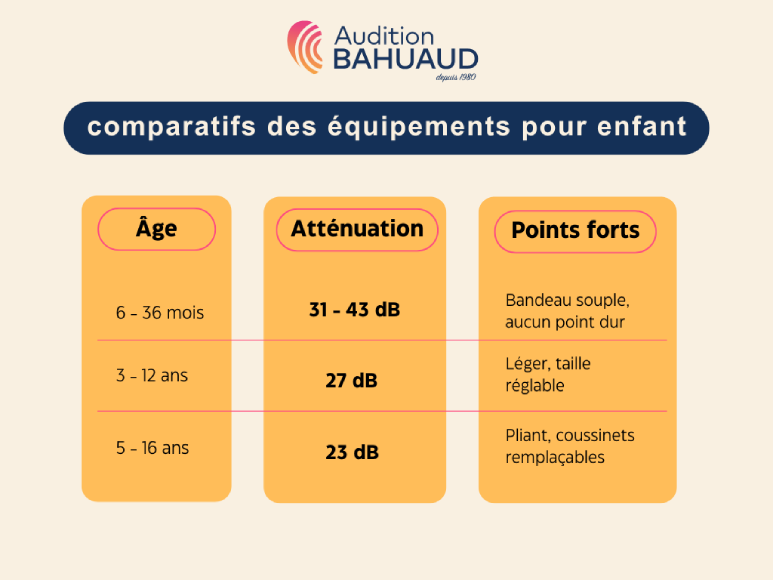
The 4 non-negotiable criteria for children’s
noise-reducing headphones
- CE certification: A legal requirement under European
law - Comfort: Soft ear pads, adjustable
headband - Weight: < 300g to prevent neck
strain - Durability: Resistance to impact and rough handling
Expert tip: always keep a helmet in your handbag, nappy bag or even in the car so you’re prepared for any situation: a match, fireworks, a festival or a family DIY session.
Preventing hearing damage in everyday life
Preventing hearing loss in children is primarily a matter of managing the volume and duration of listening time. On smartphones and tablets, the volume should not exceed 60 per cent of the maximum level, and regular breaks should be taken every 45 minutes of listening. At home, it is helpful to create a quieter environment by reducing background noise using sound-absorbing curtains or carpets.
Education also plays a key role. Explaining to children why it is important to protect themselves from noise, showing them the effect of decibels using a sound level metre app, or even setting an alert threshold together makes the process more tangible and helps children take responsibility.
Regular hearing checks, particularly if there are signs such as frequently asking people to repeat themselves or keeping the television volume too high, enable swift action to be taken if a loss of hearing is detected.
Screening and monitoring: when to consult a professional
Protecting your child’s hearing isn’t complicated, but it does require constant vigilance. Identifying excessively loud noise sources, ensuring children wear noise-reducing headphones at noisy events, establishing sensible listening habits and arranging regular hearing screenings are the cornerstones of effective prevention.
Recommended frequency of check-ups to protect your child’s hearing
- 0–2 years: Annual check-up (if development is a concern)
- Ages 3–12: Check-up every 2 years
- Ages 13–18: Check-up every 3 years + consultation if there is frequent exposure to noise
At Audition BAHUAUD, you can have a free hearing test, and custom-made hearing protectors are available to support families through this process. By taking these simple steps now, you can ensure that your children have a future in which their hearing remains a valuable asset for discovering the world.