
When exploring the different types of hearing aids, one question always comes up: should you choose an in-the-ear model or a behind-the-ear model? Behind this question lie other considerations: the degree of hearing loss, comfort, discretion, budget and lifestyle.
In this article, you’ll learn about the main differences between in-the-ear, behind-the-ear and other styles of hearing aids, so that you can make an informed choice when selecting your hearing aid.
1. The main types of hearing aids
By 2025, the majority of hearing centres will be working with three main types of hearing aids: in-the-ear, behind-the-ear and micro-behind-the-ear (or remote receiver) models.
1.1. In-the-ear hearing aids
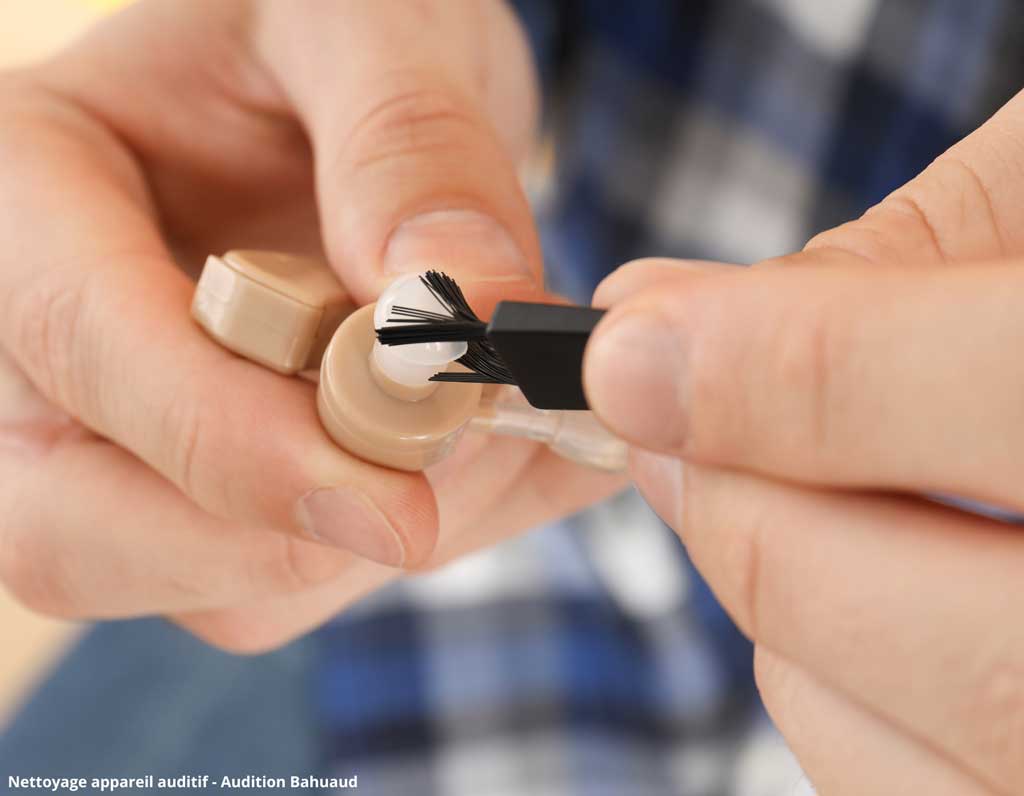
In-the-ear hearing aids sit directly in the outer ear or in the ear canal. They are made to measure using a mould of your ear. Some models sit in the concha, whilst others sit deeper, or even entirely within the ear canal, making them almost invisible.
This design appeals to people because there’s no earpiece behind the ear, which is a real bonus if you wear glasses, a helmet or a visor at work.
However, these hearing aids are best suited to mild to moderate hearing loss. They require regular maintenance, as they are exposed to earwax and moisture. Their small size may also make them difficult to handle if you have difficulty with grip or vision.

To sum up, in-ear hearing aids are a good choice if you prefer a discreet option, your hearing loss isn’t too severe, and you’re prepared to follow a cleaning routine.
1.2. Traditional behind-the-ear hearing aids

Behind-the-ear hearing aids sit behind the outer ear. A tube connects the housing to a custom-made earpiece in the ear canal. Visually, they are slightly more noticeable than in-ear hearing aids, but their design has come a long way: slimmer housings, colours that match the skin or hair, and more ergonomic shapes.
This type of hearing aid covers a wide range of hearing losses, including severe and profound hearing loss. It is often the recommended solution for people looking for a powerful hearing aid or wondering which type of hearing aid is best for severe hearing loss.
The size of the case makes it easier to incorporate the latest technologies: Bluetooth connectivity, charging, advanced noise cancellation and artificial intelligence for analysing the surrounding sound environment.
If you would like to find out more about this technological aspect, you can read Article 1 on Technologies 2025, which details the latest innovations in hearing aids.
1.3. Micro-contour earphones with a separate earpiece
The remote-receiver micro-contour hearing aid (often referred to as RIC or RITE) strikes a balance between discretion and performance. The housing sits behind the ear, but is very compact. A thin wire connects the housing to a receiver placed in the ear canal.
This model is well suited to those looking for a rechargeable Bluetooth hearing aid or the latest generation of hearing aids. You’ll enjoy good sound quality, a discreet design and advanced features: audio streaming from your smartphone, settings via an app, and compatibility with TV accessories.
Depending on the model’s power, micro-contours may be suitable for mild, moderate or, in some cases, severe hearing loss.
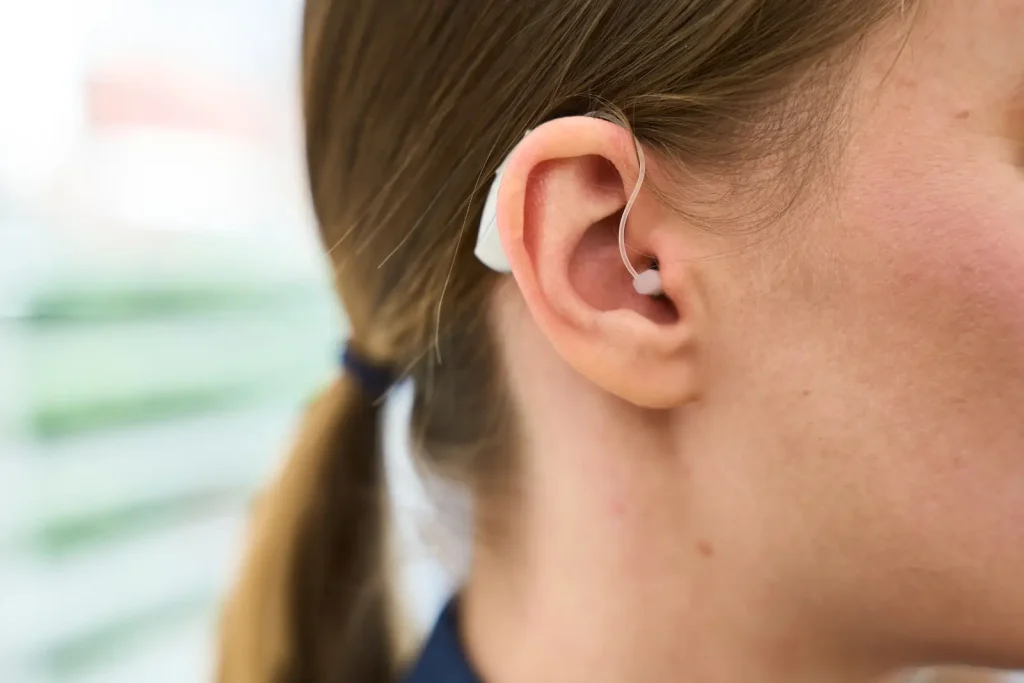
However, they advise taking particular care to avoid moisture and earwax, as the earpiece is located inside the ear canal.
1.4. Other solutions (more specific cases)
Finally, there are other solutions for specific situations: bone-conduction systems for certain malformations of the ear canal, middle-ear implants or cochlear implants for cases of very severe hearing loss. These choices are made in close consultation with the ENT specialist and the hearing aid specialist, following a comprehensive assessment.
2. In-ear vs behind-the-ear: understanding the differences
The question of in-the-ear versus behind-the-ear hearing aids often comes up, both in consultations and online. Rather than looking for an absolute winner, it’s best to consider, point by point, how each option would affect your day-to-day life.
In terms of appearance, the in-the-ear model has the edge. The device sits inside the ear, making it very discreet – and sometimes almost invisible. The behind-the-ear model is more noticeable, although the micro-behind-the-ear models remain discreet once they have been properly fitted.
In terms of power, the behind-the-ear model is more versatile. It can be adjusted for mild hearing loss, but is particularly suitable for severe or profound hearing loss. If your hearing loss is likely to change over time, this type of hearing aid offers plenty of flexibility.
When it comes to comfort, people’s experiences vary. An in-ear headphone can give a slight sensation of a blocked ear, especially at first. Over-ear headphones, particularly the open-back or semi-open-back versions, allow more natural sound to pass through and minimise this effect.
Finally, ease of use remains a key factor. If you have difficulty with fine motor skills, less nimble fingers or impaired vision, a rechargeable behind-the-ear model, with clearly visible buttons and a charging base, will often be more practical than a tiny battery-powered in-ear model.
3. How to choose a hearing aid to suit your needs
When choosing a hearing aid, you need to take several factors into account: the nature of your hearing loss, your lifestyle, your priorities and your budget.
3.1. Your type of hearing loss
Your hearing care professional will explain which options are suitable for you and which are not. This prevents you from focusing on a model you’ve seen in an advert that might not be right for your hearing profile.
Your audiogram remains the starting point. In cases of mild to moderate hearing loss, you can generally consider several types of hearing aid: in-the-ear, micro-behind-the-ear or behind-the-ear.
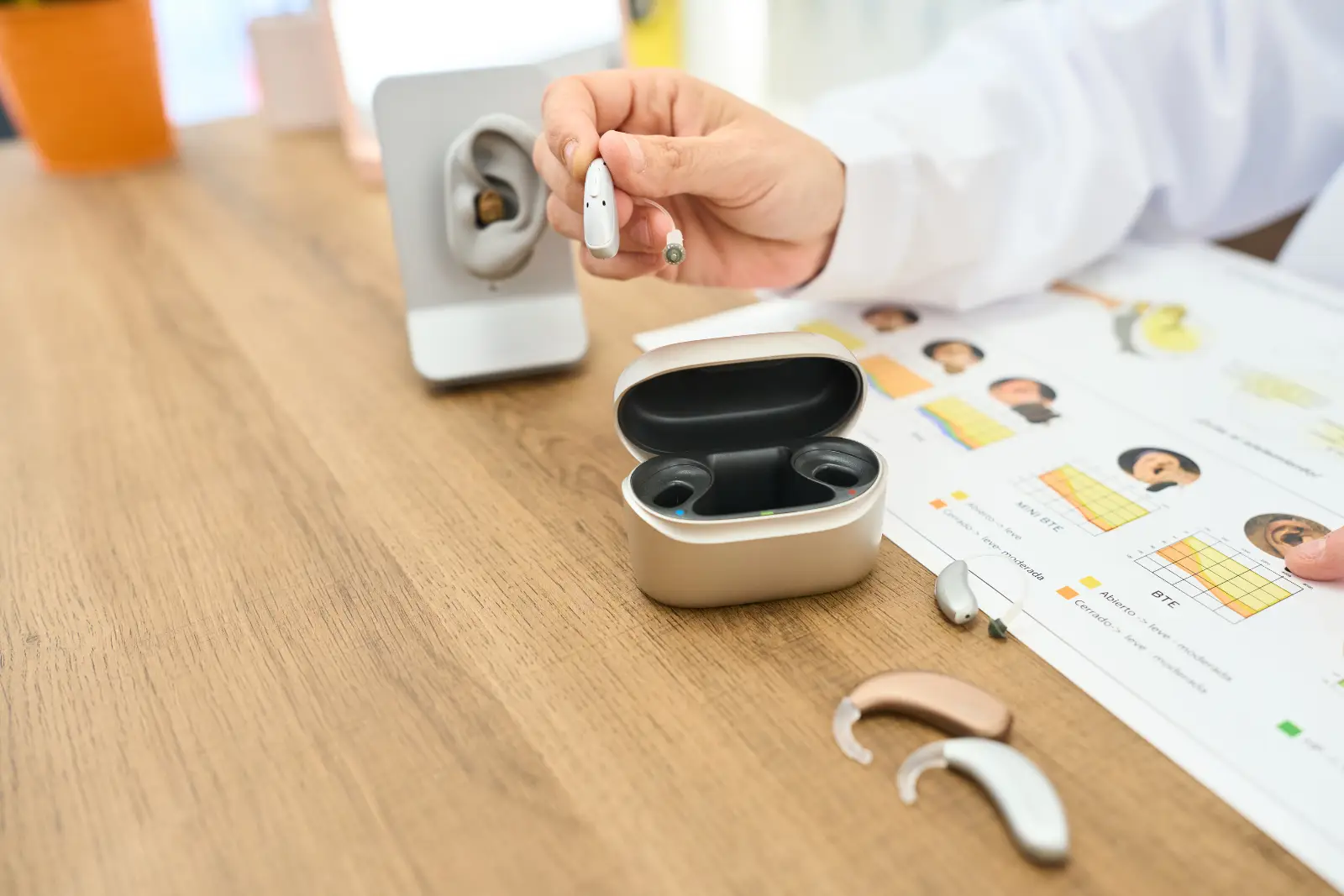
If the loss is more pronounced, particularly in the high frequencies, the ‘contour’ or ‘powerful micro-contour’ settings will often be preferred.
3.2. Your lifestyle and your sound environments
Your daily routine has a significant influence on your choice of format and technology range.
Do you work in open-plan offices, attend meetings or often go out for a meal? Noise levels vary, and situations change rapidly. You’d be well advised to opt for models equipped with advanced noise-reduction algorithms and automatic environment management. New-generation devices demonstrate how artificial intelligence can help you follow conversations more effectively in these settings.
Conversely, if your life mainly takes place in quiet settings – at home, with family conversations – your needs will be different. The priority will be less on managing complex noise and more on speech clarity, ease of use and comfort when worn for several hours a day.
3.3. Your priorities: discretion, connectivity, simplicity
The search term ‘choosing a hearing aid’ often reveals a hierarchy of priorities that you may not always have clearly articulated. Ask yourself these questions:
- Is discretion your top priority?
- Is a Bluetooth connection to your smartphone absolutely essential for you?
- Do you need a rechargeable system to avoid having to change the batteries?
- Does ease of use take precedence over everything else?
If your top priority is to keep your hearing aids out of sight, in-the-ear or slim behind-the-ear models are strong contenders. If you want to enjoy your calls, music or television directly in your ears, connected behind-the-ear and slim behind-the-ear models will often be the most suitable.
3.4. Your budget and your out-of-pocket expenses
The price depends on the type of device, the level of technology, and also the associated services (aftercare, warranties, accessories). To get a clear picture, it’s best to ask for a personalised quote at one of our hearing centres nearest to you. You’ll be able to compare several options:
- a mid-range in-ear headphone,
- a connected micro-contour,
- a more powerful design, but within a different technological range.
4. The role of the hearing aid specialist’s follow-up care in ensuring the success of your hearing aid fitting
Choosing a model is just one step. True success depends on the long term, thanks to the support provided by your hearing care professional.
After you’ve had your hearing aids fitted, your brain needs to get used to hearing sounds again that it had previously tuned out. This re-training requires gradual adjustments. You return to the centre, explain the situations in which you feel comfortable or have difficulty, and the hearing aid specialist adjusts your hearing aids.
Two people using the same model do not necessarily have the same experience: it is the settings, the regularity of the checks and the support provided that make the difference.

Maintenance also includes looking after the equipment: cleaning the ear tips, changing the wax filters, checking performance and, where necessary, replacing certain parts. Here too, behind-the-ear and micro-behind-the-ear models offer easier access to components that need replacing, whilst in-the-ear models require special care due to their position within the ear canal.
5. In summary: how to make the right choice
The various types of hearing aids available today offer you a wide range of options. The real question isn’t whether you necessarily need an in-the-ear or a behind-the-ear model, but rather how to strike the right balance between your hearing, your daily life and your priorities.
In practical terms, when choosing your hearing aid:
- Have a full assessment and discuss your audiogram with your hearing aid specialist.
- Discuss your different areas of life (work, leisure, family) and your expectations regarding privacy, connectivity and simplicity.
- Take your time to compare in-ear and behind-the-ear options, and don’t forget to consider the micro-behind-the-ear option as well.
- Compare a range of offers using a personalised quote that takes account of any available refunds.
- Make sure you monitor the situation regularly so that you can adjust your settings over time.